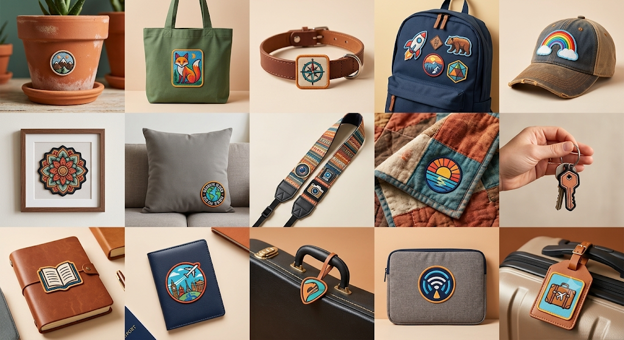
Custom patches are stepping far outside the sleeve or jacket panel. A custom patch is a small, durable, decorative badge made from embroidered thread, woven fabric, PVC, or chenille that can be sewn, ironed, or glued onto almost any surface, not only shirts and hoodies.
Most people picture patches on varsity jackets or uniform sleeves, but patches work just as well on backpacks, pet gear, journals, wall art, corporate merchandise, and dozens of other everyday items.
Because patches are built to survive washing, weather, and daily handling, they hold up on canvas totes, denim aprons, camping gear, and craft projects the same way they hold up on a jacket cuff.
This guide covers 15 creative custom patch ideas for uses beyond clothing, along with the patch types, backing options, and attachment methods that work best for each project.
Whether you are a small business owner building branded swag, a hobbyist working on a memory quilt, or a team organizing gear for a season, there is a patch style and application method suited to the job.
Why Custom Patches Work So Well Beyond Apparel
Custom patches hold up on non-clothing items because of three properties: durability, backing flexibility, and design range. Embroidered and woven patches are stitched from polyester or cotton thread, so they resist fading, cracking, and fraying far longer than printed stickers or decals.
Custom PVC patches are made from soft, waterproof rubber, which makes them a strong choice for gear that faces rain, mud, or constant handling, such as backpacks or dog collars. Chenille patches add raised texture and a bold, retro look that suits soft home decor pieces like pillows or throws.
Backing choice matters just as much as patch type. Iron-on backing works well on flat, heat-safe fabric surfaces such as tote bags or seat covers. Sew-on backing is the sturdiest option for bags, straps, and anything handled often, since heat can weaken glue over time on high-friction items.
Velcro backing lets a patch move between several bags or gear pouches without committing to one placement, which is popular with campers, cyclists, and travelers who like to swap designs.
15 Creative Ways to Use Custom Patches Beyond Clothing
From travel gear to home decor, here are 15 practical, high-demand ways to use custom patches for projects that have nothing to do with a shirt or jacket.
1. Backpacks, Duffels, and Travel Bags
Backpacks and duffel bags are the most common non-clothing surface for custom patches, and for good reason. Canvas and nylon travel bags hold sew-on and Velcro-backed patches securely through years of flights, hikes, and daily commutes. Velcro backing is especially popular here because it lets travelers rotate patches to mark destinations, milestones, or moods without permanently altering the bag. Businesses also use custom embroidered patches on branded gear bags and staff backpacks as a durable alternative to printed logos, since embroidery holds its shape through repeated packing and travel.
2. Canvas and Denim Tote Bags
Tote bags are a favourite surface for small businesses, farmers markets, and craft sellers because a plain canvas tote instantly looks branded and finished once a patch is added. A single centred patch on a tote reads as intentional merchandise rather than an afterthought, and because totes are washed less often than clothing, both iron-on and sew-on backings perform well here.
3. Hats, Caps, and Other Headwear Accessories
Patches are one of the fastest ways to customize a plain cap without a full embroidery run on the crown. A single front patch on a structured or trucker-style cap gives a finished, boutique look, and many brands use this approach for custom hats because it keeps production simple while still delivering a premium result. Bucket hats, visors, and beanies all take patches well, particularly PVC and woven styles that hold their edge on curved surfaces.
4. Pet Collars, Leashes, and Pet Vests
Pet gear takes a beating from weather, drool, and constant movement, which makes waterproof, flexible patches the right choice. Custom PVC patches resist water and cracking far better than embroidered options on pet collars, harnesses, and service vests, and Velcro backing allows an owner to switch a patch between a collar and a leash without extra sewing.
This is a growing niche for pet brands, dog walkers, and rescue organizations that want a durable, washable way to display a name, breed, or service designation.
5. Keychains and Bag Charms
Mini patches, often two inches or smaller, work well as standalone bag charms or as an add-on paired with a metal ring. This format is popular for event merchandise, school fundraisers, and collectible drops, since a small patch feels more affordable than a full-size version while still carrying a logo or mascot clearly.
Pairing a mini patch with custom keychains gives a business two branded takeaways from a single production run, which keeps unit costs down for bulk giveaways.
6. Journals, Notebooks, and Planner Covers
Fabric-covered journals and planners take iron-on and sew-on patches just as well as clothing does, and this has become a popular customization trend among stationery brands and creators. A patch on a journal cover works as a signature detail for gift sets, subscription boxes, or personalized planners, and because journals are handled gently compared to bags, even lighter iron-on backing tends to hold up for years.
7. Lanyards, Badge Holders, and ID Straps
Lanyards are usually printed, but a small woven or embroidered patch sewn onto the strap or badge holder adds texture and a more premium feel for staff credentials, conference badges, and club membership cards. Pairing patches with custom printed lanyards gives organizations a coordinated look across an event or workplace, and the patch element makes the lanyard feel less disposable than a plain printed strap.
8. Wall Art, Pinboards, and Shadow Box Displays
Patches are increasingly used as standalone decor rather than as an accessory on something else. Collectors and hobbyists arrange patches in shadow boxes, on cork pinboards, or mounted on canvas as a display piece, similar to how enamel pins are framed. Custom 3D embroidery patches work especially well here because the raised, sculpted texture catches light and reads clearly from a distance, which flat printed decor cannot replicate.
9. Memory Quilts and Textile Keepsakes
Quilters and textile artists use patches to preserve milestones, team history, or travel memories inside a blanket or wall hanging, since fabric patches integrate into stitched projects far more naturally than printed photos. This connects closely to the raised, tactile finish chenille patches, since chenille’s soft texture blends well into quilted and woven textile pieces without feeling stiff against other fabric.
10. Camping and Outdoor Gear
Tents, sleeping bag sacks, gear pouches, and hiking backpacks all benefit from patches that can survive dirt, moisture, and rough handling. Scout troops, outdoor clubs, and gear brands rely on sew-on patches for this exact reason, since stitched attachment holds far more securely than adhesive backing when gear is stuffed, compressed, and dragged through rough conditions season after season.
11. Corporate Swag and Promotional Giveaways
Patches have become a popular upgrade from printed logos on non-apparel promotional items such as gear bags, hat clips, tool rolls, and branded pouches, because a stitched patch reads as higher-value than a printed logo at trade shows and client events. Custom woven patches are a common choice for this use case, since the flat, tightly woven finish reproduces small text and detailed logos more clearly than a bulkier embroidered patch.
12. Gift Wrapping, Favor Bags, and Event Decor
A patch pinned or sewn onto a fabric gift bag, favor pouch, or wrapping ribbon adds a keepsake element that outlasts the gift itself, which makes it a popular choice for weddings, baby showers, and milestone birthdays. Guests can keep the patch long after the event, turning simple packaging into a small souvenir instead of something that gets thrown away.
13. Scrapbooks and Craft Projects
Patches give scrapbookers and mixed media crafters a dimensional element that stickers and printed paper cannot match. A small patch glued or stitched into a page adds texture and a tactile focal point, and because patches come in nearly any shape, they work well for commemorating trips, sports seasons, or family milestones inside a physical keepsake book.
14. Musical Instrument Cases and Gig Bags
Guitar cases, drum bags, and instrument gig bags are usually plain black nylon or canvas, which makes them an easy canvas for personalization. Musicians and bands use patches to mark ownership, display tour or band branding, or simply add personality to gear that otherwise looks identical to everyone else’s case at a venue.
15. Car Interiors, Seat Covers, and Sun Visors
Fabric seat covers, sun visor organizers, and car seat headrest covers all take patches well, and this is a growing trend among car clubs and enthusiasts who want to customize an interior without permanent modification.
Iron-on patches are a practical option here since most seat covers can handle a household iron or heat press safely, though sew-on backing is worth choosing for any patch placed somewhere that gets frequent friction, such as an armrest or door pocket.
Patch Type Comparison for Non-Clothing Projects
Choosing the right patch type matters more for non-clothing projects than for apparel, since surfaces like bags, pet gear, and outdoor equipment face different wear than a shirt sleeve. Use this table as a quick reference.
| Patch Type | Best For | Weather Resistance | Texture |
| Embroidered | Bags, hats, gifts, corporate swag | Good | Raised thread detail |
| Woven | Small logos, lanyards, detailed text | Good | Flat, smooth finish |
| PVC / Rubber | Pet gear, outdoor gear, camping equipment | Excellent | Soft, waterproof |
| Chenille | Quilts, pillows, wall art, retro decor | Fair, best kept dry | Thick, fuzzy pile |
| 3D Embroidery | Display pieces, shadow boxes, premium gifts | Good | Raised, sculpted |
How to Attach Patches to Bags, Gear, and Other Surfaces
The right attachment method depends on the surface and how often the item gets handled or washed. Between sew-on versus iron-on patches, iron-on backing bonds a patch using heat-activated adhesive and works best on flat, heat-safe fabric that will not be under constant stress, while sew-on backing is the strongest option overall, since stitching does not weaken with heat, water, or repeated flexing, which is why it is the standard choice for bags, gear, and outdoor equipment. For a closer look at how these two methods compare in practice.
| Backing Type | Best Surfaces | Removable? | Durability |
| Iron-on | Totes, journals, seat covers, flat cotton or canvas | No | Moderate |
| Sew-on | Backpacks, gear bags, camping equipment, pet vests | No (unless unstitched) | Highest |
| Velcro | Backpacks, gear pouches, swappable displays | Yes | High while attached |
| Adhesive / peel-and-stick | Light, short-term craft use | Limited | Lowest |
Tips for Designing Patches for Non-Clothing Items
- Match the patch size to the item. A patch that looks right on a jacket back can overwhelm a small journal cover or keychain.
- Pick a durable border between merrowed edge versus laser cut borders for items that get handled often. A clean, tightly bound edge holds up better on bags and gear than a loose or unfinished one.
- Choose waterproof materials for anything that goes outdoors, such as pet gear, camping equipment, or car accessories.
- Keep text minimal on smaller formats like keychains and lanyard patches, since fine detail can blur below roughly two inches.
- Confirm the surface can handle heat before choosing iron-on backing. Some synthetic bag fabrics and vinyl surfaces can melt or warp under a heat press.
Frequently Asked Questions
What are some creative ways to use custom patches besides clothing?
Custom patches Canada work well on backpacks, hats, pet collars, keychains, journals, lanyards, wall art, quilts, camping gear, corporate swag, gift wrapping, scrapbooks, instrument cases, and car interiors. Any fabric or semi-fabric surface that can take iron-on, sew-on, or Velcro backing is a suitable patch project.
Can custom patches be used on bags?
Yes. Bags are one of the most common non-clothing patch applications. Canvas and nylon bags hold sew-on and Velcro-backed patches particularly well, since stitched or hook-and-loop attachment withstands daily handling far better than adhesive backing alone.
What type of patch is best for outdoor or pet gear?
PVC and rubber patches are the strongest choice for outdoor and pet items because they are waterproof, flexible, and resistant to cracking in cold or wet conditions. Embroidered patches can also be used outdoors but hold up best when paired with sew-on backing rather than glue.
Do custom patches work on non-fabric surfaces?
Patches attach most securely to fabric or fabric-like materials. On non-fabric surfaces such as hard plastic or metal, adhesive-backed patches or patches mounted onto a fabric panel first, such as a strap or backing tab, tend to work better than direct iron-on or sew-on application.
What is the most durable way to attach a patch to a bag or gear item?
Sewing is the most durable attachment method for bags, backpacks, and outdoor gear, since stitching holds up under repeated flexing, temperature changes, and rough handling far longer than heat-activated adhesive.
Can patches be used for corporate or promotional merchandise?
Yes. Woven and embroidered patches are widely used on corporate gear bags, tool pouches, and branded accessories as a more premium alternative to printed logos, since stitched detail tends to read as higher quality than a flat print at trade shows and client events.
What size patch works best for keychains and small accessories?
Patches between one and two inches generally work best for keychains, bag charms, and lanyard accents. Anything smaller risks losing fine text or design detail, since embroidery and weaving both have a practical limit on how small a detail can be reproduced clearly.
Turn Any Surface Into a Custom Patch Canvas
Custom patches have grown far past the jacket sleeve, and that is largely because they solve a practical problem: they add a durable, personal, branded detail to almost any fabric surface without the cost or commitment of a full custom print run.
Whether the goal is a branded gear bag, a keepsake quilt, a swappable travel backpack, or a batch of promotional giveaways, choosing the right patch type and backing makes the difference between a patch that lasts a few months and one that holds up for years.
If you have a non-clothing project in mind, the fastest way to get it right is to match the material to how the item will actually be used, whether that means waterproof PVC for outdoor gear, sew-on backing for anything handled daily, or a raised 3D finish for a display piece.
Reach out The Custom Patches Canada with your idea, and the design team can recommend the patch type, size, and backing that will hold up best for your specific project.