
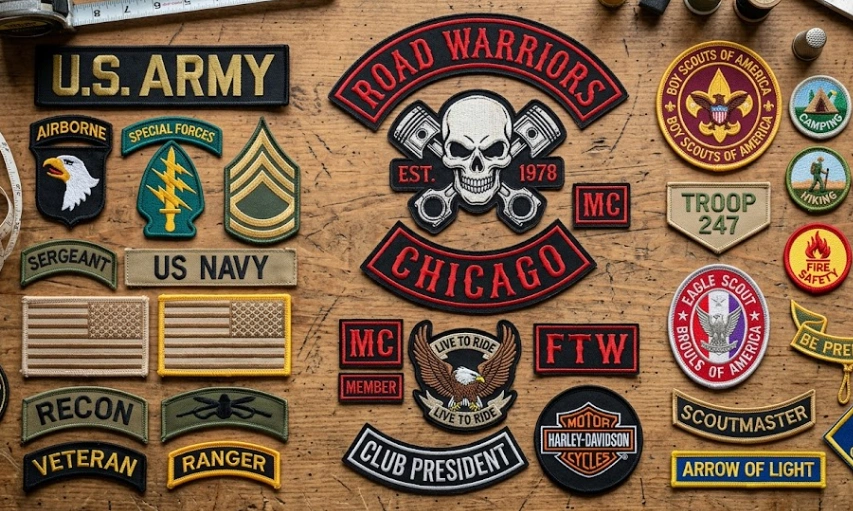
A patch is rarely just a piece of embroidered fabric. Across three of the most iconic patch-wearing communities in the world, military units, motorcycle clubs, and scouting organizations, a patch tells a story of identity, achievement, loyalty, and belonging.
Understanding the history & meaning behind patches helps explain why this small fabric piece has remained relevant for more than a century.
Moving from the battlefield to the open highway to the campground and now into the boardroom branding of businesses across Canada.
Before you design your own patch, read our guide, as it helps you understand where this tradition comes from and why it still matters.
History & Meaning
The history & meaning behind patches are not simply a historical curiosity. It explains why patches remain such a powerful tool for building identity in modern organizations, whether military, riding club, scout troop, sports team, workplace, or brand.
A patch condenses history, achievement, and belonging into a small, wearable object, and that emotional weight is exactly why the tradition has survived more than a hundred years of changing fashion and manufacturing technology.
Where It All Began
The history of patches stretches back to the early twentieth century, when military forces first began using embroidered insignia to identify units on the battlefield.
The United States Army’s 81st Infantry Division is widely credited with introducing the first officially sanctioned shoulder sleeve insignia during the First World War, a wildcat silhouette that soldiers wore to build unit pride and distinguish themselves from other divisions.
British and Commonwealth forces, including Canadian regiments, adopted similar formation signs during the same period, using colour and shape to mark battalions, brigades, and divisions at a glance.
Custom Patches Post WW2
By the Second World War, patches had become a standardized part of military uniform culture across nearly every Allied and Axis force.
Canadian regiments developed their own formation patches, cap badges, and shoulder titles, many of which are still recognized and studied by military historians today.
What began as a practical identification tool quickly took on symbolic weight. A patch signified which unit a soldier belonged to, what battles that unit had fought, and what values it stood for.
Custom Patches for Clubs
Outside the military, the same embroidery techniques and symbolic logic were adopted by other groups looking to mark identity and belonging.
Motorcycle clubs, many of them formed by returning veterans after the Second World War, borrowed directly from military patch culture to create their own insignia systems.
Custom Scout Patches
Scouting organizations, which predate both world wars, developed merit badge systems built around a similar principle: a patch as visible proof of skill, effort, or accomplishment.
Using embroidered patches to communicate identity without words is what connects military, biker, and scout patch traditions today, even though each community has developed its own distinct rules, hierarchy, and etiquette around how patches are earned, designed, and worn.
Military Patches: More Than Identification
The meanings of military patches go far beyond simple unit recognition. Modern military patches typically fall into several categories, each carrying its own significance.
Unit and Formation Patches
These identify the specific division, brigade, regiment, or squadron a service member belongs to. Colours, shapes, and imagery are often chosen deliberately. A red and gold shield might reference a founding battle, a regional symbol, or a historic commanding officer.
In Canadian military tradition, formation patches frequently reference geography, heraldry, or the founding history of a regiment, tying the wearer to a lineage that can span generations.
Rank and Trade Insignia
Rank patches communicate a service member’s position within the chain of command, while trade or qualification patches indicate specialized skills such as parachute wings, marksmanship badges, or technical trade qualifications.
These patches function as a visual resume, allowing anyone in uniform to understand a colleague’s role and experience at a glance.
Morale Patches
Morale patches are a more recent development, particularly popular since the early 2000s. Unlike official insignia, morale patches are informal, often humorous or irreverent, and worn on hook-and-loop backing so they can be swapped depending on the unit, mission, or mood.
They do not carry official sanction, but they carry real cultural weight within a unit, often referencing inside jokes, unit nicknames, or shared experiences from deployment.
Memorial and Commemorative Patches
These patches honour fallen service members, mark significant anniversaries, or commemorate specific operations. They are often worn with particular solemnity and are among the most emotionally significant patches in military culture.
Across all these categories, the underlying principle remains the same: a military patch is a compressed piece of history, worn on the body, that communicates who you are, what you have done, and where you belong within a larger structure. Consult our custom patch breakdown guide if you are planning to order them.
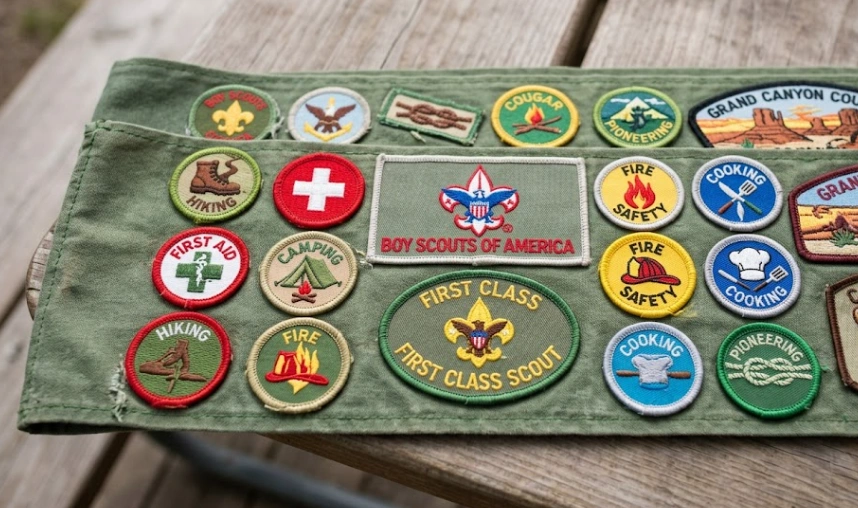
Scout Patches: Patches as Proof of Growth
Scouting organizations developed one of the most structured and widely recognized patch systems in the world, built around merit badges and achievement patches.
A scout earns a merit badge by demonstrating competence in a specific skill, whether that is wilderness survival, first aid, citizenship, or dozens of other categories. Each badge represents hours of instruction, practice, and testing.
Scouting groups across Canada regularly commission custom patches to commemorate camps, milestones, and troop identity, a tradition that has remained remarkably consistent since scouting’s founding in the early twentieth century.
Parents ordering custom patches for their young scouts prefer iron-on backing for patches in most cases and sew-on backing if extreme durability is important. Selecting the appropriate border type is equally essential.
A good border protects the patch against fraying and helps increase the durability. This helps the patch last longer. We recommend choosing your border options by consulting our comparison guide on merrowed edge vs. laser cut.
Meaning of Biker Patches: Earning Your Place
The meaning of biker patches is rooted in a strict, often misunderstood system of hierarchy and respect. Answering why do bikers wear patches requires understanding the structure most motorcycle clubs use, commonly referred to as the three-piece patch system.
The Top Rocker
The top rocker, a curved patch worn above the main club emblem, displays the club’s name. This is the first and most visible marker of club identity.
The Centre Patch
The centre patch is the club’s main emblem or logo, typically the largest and most detailed patch on the vest, known as a cut or colours. This is the symbol most closely associated with the club’s identity and reputation.
The Bottom Rocker
The bottom rocker, worn below the centre patch, identifies the specific chapter or territory the member belongs to, often a city, region, or province.
Additional Biker Insignias
Beyond the three-piece system, motorcycle club members wear additional patches that must be earned through time, loyalty, and specific accomplishments within the club. A member’s rank, such as president, vice president, road captain, or sergeant at arms, is displayed through position patches.
Recognition Badges
Years of service, participation in long rides, and other milestones are often marked with additional small patches collected over a riding career. This made “Why do bikers wear patches?” a common question among people unfamiliar with the culture.
To an outsider, custom vest patches might look decorative. To club members, every patch on that vest was earned, and wearing a patch you have not earned is considered a serious breach of respect within riding communities.
Ordering Custom Patches in Canada
At The Custom Patches Canada, we work with military associations, motorcycle clubs, scouting groups, sports organizations, and businesses across the country to design patches that carry real meaning, not just decoration.
We produce custom embroidered patches, custom woven patches, and custom PVC patches for military units, motorcycle clubs, scouting groups, and corporate clients. Bulk pricing is available for clubs, troops, and organizations ordering in volume.
Place your orders online through our website or contact our team to get a free quote and guidance on ordering your patches without having to worry about the final result not meeting the expectations.
Frequently Asked Questions
What is the history of patches, and where did they originate?
Custom patches originated in the early twentieth century with military units for identification, notably the U.S. Army’s 81st Division in WWI, leading to similar practices in motorcycle clubs and scouting organizations.
What do military patches actually mean?
Military patches indicate unit affiliation, rank, skills, morale, and memorialize fallen members, serving as a visual record of service members’ identities and histories.
Why do bikers wear patches, and what is the three-piece patch system?
Bikers display identity through earned patches on their cuts, featuring a three-piece system: a top rocker for the club name, a centre emblem, and a bottom rocker for the chapter or territory.
What is the meaning behind scout merit badges and troop patches?
Scout merit badges and troop patches signify skill development, personal growth, and participation, creating a visual record of a scout’s journey, akin to traditions in military and motorcycle clubs.
What is the process for ordering patches online from The Custom Patches Canada?
Simply upload your design and get a quote from our team within 1 to 2 business days, approve designs, and analyze mockups. Once all is cleared, production starts, and your order is delivered within 7 to 10 days to your doorstep.
Order Custom Patches For Your Next Project
The history & meaning behind patches connects three very different communities, military units, motorcycle clubs, and scouting organizations, through one shared idea: a patch is proof of identity, effort, and belonging that words alone cannot communicate.
From the formation insignia of the First World War to the earned colours of a modern riding club and the merit badges of a scouting sash, this century-old tradition continues to shape how groups across Canada build pride and recognition today.
If your unit, club, troop, team, or business is ready to create a patch with its own story, start designing your custom patch with The Custom Patches Canada and bring this tradition into your own colours. Contact us today for a free quote!